Thoughts on game development, writing, publishing, and my various pet interests.
Paizo vs. Diamond is a Disaster for the RPG Industry
This is a nasty mess. I’m pulling for Paizo!
For those of you who aren’t in this industry, this probably doesn’t make a lot of sense. But here’s the short version:
Imagine if you made your own jewelry and wanted to sell it. There’s a distributor who can get it into stores. You have to pay shipping to get your jewelry to them, but they handle the rest. When one of your pieces sells, the store gets a cut, the distributor gets a cut, and you get whatever is left.
Fast forward a few years. The distributor has a ton of your stuff in stores but also has a warehouse full of other pieces ready to be sent as stock is freed up. Suddenly the distributor stops all work and declares bankruptcy. You learn they’ve been trying to leverage their stock for loans with a private equity company. Now that company descends on their warehouse, saying they get to liquidate all the assets — including YOUR jewelry! — and keep all the money to cover what the distributor still owes.
Naturally, you’d call bullshit, right? The distributor didn’t buy your jewelry, they just had an agreement to help sell it. You don’t get paid until that happens. In fact, at any time you could have demanded your jewelry back!
But NO, says the private equity company. That jewelry is ours now. Sucks to be you.
That’s basically what’s going on with Paizo right now. For those who don’t know, Paizo makes Pathfinder, a “spinoff” of Dungeons and Dragons 3rd edition and the only game that comes *close* to competing with D&D’s industry dominance.
Diamond was their distributor, getting physical Pathfinder and Starfinder books into game/hobby/book stores.
A while back, Diamond declared bankruptcy. It would make sense that all the companies using them for distribution would get their stuff back, but their creditors claim *they* should get to extract the value owed to them first. Problem is, the value owed to the creditors is based on *stock that belongs to other companies*. They’re claiming they get to basically liquidate Paizo’s property without paying Paizo a dime, where Paizo et al are claiming that stuff still belongs to them.
Like I said, it’s a mess. And it deals damage to the industry as a whole. Even more reason to despise venture capital / private equity.
https://paizo.com/blog/paizo-restructuring-a-difficult-update-about-our-future

On Writer’s Block
So… both my undergraduate and graduate degrees were in Creative Writing. Not the most marketable degree in the world, for sure (argh) but I did learn some things about the writing process, and one of them came up today.
I spent the last two days trying unsuccessfully to start Act 4 of a 7-act adventure I’m writing for Torg Eternity. Really it’s more like the last four days, because I blew two days doing research to find a sensible place to put it, then had to pick a decent location. All during this process something felt “off” and when I finally lit upon the perfect spot in Google Earth, it felt “right.”
But then when I started to write, I was majorly blocked. I took no less than three naps yesterday, spent hours typing-erasing-typing-erasing, and kept being sucked into social media time killers. Today there were fewer naps but every sentence seemed like trying to extract water from a stone. Nothing felt right. I hated it. In theory it should have been okay, but I could tell it just wasn’t.
In school one of my most insightful professors talked about writer’s block being the unconscious mind exerting pushback. It knows stuff your conscious mind doesn’t, and even through your conscious mind is a better grammarian, your unconscious is a far better writer. If words aren’t flowing, it’s almost always because your unconscious is telling you that a) you aren’t finished connecting ideas and doing preliminary imaginative work, or b) your conscious mind is trying to seize control and do things its way.
When I realized that’s what was going on, I was 800 words in and mostly finished with scene 1. But I realized it would have to be scrapped (I didn’t scrap it yet, just in case I need to steal something from it, but I moved it to the back of the document).
So here I am days later just getting started, but now that I am listening to my unconscious again, I can already tell this is going to be way better!
islands of fire on the Pegshow
I was interviewed by Ron Blessing for this week’s PEGshow, Pinnacle’s official podcast for news and discussion! We talked about my new setting, Islands of Fire, for Sigil’s upcoming Savage Sign #2!
http://peg.show/2020-26-racial-traits-and-modifiers-w-brian-reeves
Islands of Fire setting coming for the Savage Worlds RPG
The 2nd issue of The Savage Sign is now live on Kickstarter!
This issue features two original settings, one of which is my own Polynesian-inspired fantasy setting, “Islands of Fire,” the basis for my series of novellas by the same name.
This issue also features Eugene Marshall’s Verne/Lovecraft setting “The Depths of Madness,” a ton of new Savage Tales for a variety of settings and genres, new character options, new rules systems, fiction, amazing art, and more.
https://www.kickstarter.com/projec…/sigil/the-savage-sign-02
RPG Articles of Yesteryear
While tooling around in the Steve Jackson website, it occurred to me to look up my own name. Over 20 years ago I sold an article for Pyramid Magazine, which was dedicated to the GURPS roleplaying game, a game I played quite a bit through the 90s. The article was called “Machine Magic,” and presented a new type of magic that used specially-built magical machines that connected to ethereal gears that (in the fiction) powered everything in the world behind the veil of our reality. The three monster entries I sold to West End Games for their Torg “Creatures of Aysle” bestiary was the first sale I ever made in this industry, but this was the first one that stood on its own. I don’t remember how much I made on that sale—not much, I’m sure, but I might as well have been paid in gold doubloons, I was so excited.

Somehow I forgot about another article I sold to them a year or two later. While looking for the Machine Magic article, to see if it was still even out there somewhere, I stumbled upon this gem. How could I have forgotten about this? The idea was certainly inspired by Torg, which uses a specialized card deck to determine initiative and to give the player characters some extra narrative control, but rather than propose a similar deck for GURPS, I offered rules on how to use a standard card deck or Tarot deck to create a similar effect.
http://www.sjgames.com/pyramid/sample.html?id=1916
The article is free, their way of promoting the other magazine content. After this sale, I went a good 15 years making only free stuff for my own use or as fan freebies. I also moved away from GURPS right around the time this was published. They make some of the most undeniably excellent supplements (I was once almost selected to rewrite their Swashbucklers setting book for a 2nd edition, a job that would have honestly been above me at the time), but the system was just too much for me to handle. It is notorious for being extremely “crunchy,” which in tabletop RPG terms means it has a lot of rules. Plus the 3rd edition of D&D came out right around that same time and I, like most of the RPG world at the time, got sucked into it pretty hard for a few years.
Anyway, it’s such a weird experience to stumble upon your own forgotten writing. My memory isn’t so great, but I would have thought for sure I’d remember another RPG sale!
Indiana Jones and the Unicorn’s Legacy
I’m back with another of my explorations of the “Indyverse,” where I look at the many lesser-known books, comics, games, etc. that are connected to one of my favorite fictional heroes, Indiana Jones. Today I’ll have a look at Book #5, Indiana Jones and the Unicorn’s Legacy.

So far these books have followed one another chronologically, covering Indy’s early adventures in the first years of his professional career in archaeology. The first several in this series were written by Rob MacGregor, who, as I finally realized, views Indiana Jones more through the lens of historical fiction, rather than as connected to the pulp action genre, which is where the character got its start (among the many inspirations for Lucas and Spielberg were the Republic serials of the 40s, comics and dime novels of their youth, and the 1954 Charlton Heston movie Secret of the Incas).
MacGregor’s Indy novels haven’t been very heavy on the action sequences, though each one become more action-packed than the previous—at least, until this one.
After a brief historical scene set in the 1700s, the novel opens with a flashback to one of Indy’s earlier grad school digs in 1924, this one at a French cave with Paleolithic drawings. The expedition is led by a lab instructor named Roland Wolcott, and like happened in a previous book, Indiana Jones and the Seven Veils, Indy manages to find something significant but the expedition leader tries to take full credit.
With him is fellow grad student Mara Rogers, whose specialty is art history. During this scene, Indy first sees references to unicorns, but this all comes full circle later when, five years later, Mara comes dramatically back into his life while Indy is doing some field research on the Anasazi in the American Southwest. She’s on the run from Wolcott, who is working with some dangerous Italian villain, tasked with stealing a unicorn’s horn (called an “alicorn”) from her.

Indy’s best friend from college, Jack Shannon, comes to help, as do a couple of other new characters, including a mysterious Native American mystic named Aguila. This man’s name (“Eagle,” in Spanish) references a spirit animal motif that has subtly lurked in these books from the beginning, with the eagle being representative of Indy’s soul (every chapter in these books begins with a heraldic standard of an eagle carrying a sword and sheaf over an ocean sunrise).
Most of the book is comprised of these various characters moving about the desert of southwest Colorado, usually running from bad guys, looking for each other, or both. After a while the chapters start to blur and we crave for something to happen. Of MacGregor’s books so far, this one is the most dull. A shame, because an actual unicorn’s horn would make a great McGuffin, and the sun-baked desert and the mysterious silent edifices of the abandoned cliff dwellings would make a great Indiana Jones setting. But in the end, not much happens, outside of a few fist fights and some car pursuits. The ending relies on mind-altering effects, something MacGregor also used in The Seven Veils, a cliché that lets him write about some astonishing visions while keeping the reader (through Indy’s POV) unsure what is real.
Canon or Not?
This follows so close behind the others so far in this series, and doesn’t do anything to break that, outside of being a bit of a dull read, so I’ll go ahead and consider it canon.
Read It or Skip It?
If you’ve read the first four, this is the first one where I advise some caution. Read it only if you like MacGregor’s sense for historical details, don’t mind a dearth of page-turning action, and want to follow Indy closer to the end of the 1920s. But if you’re short on time or attention, skip it.

Indiana Jones and the Genesis Deluge
I started reading this series back in 2016, when our family took a trip to Disneyland. Getting to ride the Indiana Jones ride again (for the first time since 1995!), popped back into place a love I have for this character and his particular brand of pulp adventures. I vowed I’d read all the novels, starting with a couple I had back when I was younger but, for some reason, never touched.

Indiana Jones and the Genesis Deluge is the 4th book in the series, started by Rob MacGregor. Like the others, this one takes place before the events in the movies, detailing Indy’s early years as an archaeology professor and his first adventures.
It’s Spring of 1927. Indy returns to his university in London, after the perilous events of the previous book (Indiana Jones and the Seven Veils). His wife, Dierdre Campbell, died tragically in the jungle, and Indy is… not in a good place. He snaps at students and walks around in a daze. When told that an academic review board is having second thoughts about his qualifications to teach Celtic History (his expertise so far), he decides to quit his job and go reconnect with his friend from college, Jack Shannon. But Shannon’s family is involved in mafioso dealings, and business is booming during the Prohibition, leaving Shannon a bit jumpy and prone to drive-by shootings and getting arrested.
Thankfully, Indy’s approached by a Russian doctor who, during WWI, came into possession of some information pertaining to the site of Noah’s Ark. He needs someone between jobs and with some experience in archaeology digs — and Indy is perfect!

Along with the doctor’s gorgeous (of course!) daughter, Katrina, Indy sets out to Turkey to locate the site. He brings Jack Shannon along with him to keep his friend out of trouble. In the cave city of Cappadocia they get entangled with a mysterious group that seems bent on stopping them at all costs, not to mention troublesome agents from the Kremlin and even local bandits.
I won’t give away too much of the ending, though I was a little disappointed. There was a lot of build-up toward the final reveal, and most of the book was spent first in Chicago with Jack Shannon’s family problems, then in travel, then in an extended sequence in a network of catacombs beneath Cappadocia, and then journeying up the snowy slopes of the mountain. The end felt rushed. I wanted to see more of the site!

After some more intense action sequences in the previous book, the action in this one slid back into something with a little less intensity. Not that there weren’t situations of peril, chases, fistfights or gunfights, but they didn’t seem to have the same gravity as in the previous book, or as in the movies. Nonetheless, there were some scrapes and dangerous situations. By this point, the reader can get a strong sense of MacGregor’s view on Indiana Jones — for him they’re more like historical fiction featuring some physical conflicts. I tend to see Indiana Jones adventures within the larger field of pulp, which turns up the dials on action, sometimes at the cost of some realism. It seems MacGregor is always concerned with making his stories feel possible, the action grounded in the real. Which is probably why I find the scenarios acceptable but the scenes sometimes lacking in urgency.
Canon or Not?
Anyway, I like to think of these books as a better “backstory” for Indy than the Young Indiana Jones series. They don’t mesh well, meaning only one of them could be true. I lean on these books as being canon.
Read it or Skip It?
So far, all of these books follow one another sequentially, even though it isn’t truly necessary to read them in order… In other words, this isn’t Part 4 of a single story, just a new book in the ongoing adventures of Indiana Jones. If you’re a fan of Indiana Jones, I’d say read it.

Divine Shadow
I just want to take a moment to mention a project by a long-time friend of mine, Greg Sommers, who owns and operates a video production company in Seattle, Washington. Divine Shadow was a labor of love for him, a 14-part web-exclusive martial arts miniseries available for free on YouTube.
Divine Shadow tells the story of a young woman and her little sister forced to flee from an abusive father, only to find herself entangled in a far-spanning plot that involves a secret society. She must fight for her life, and that of her sister, and channel a strange righteous force rising inside her. The series is a martial arts drama, shot right there on the streets of his native Seattle.
Check out the first episode, and then head on over to YouTube to see the rest of this action-packed series.
Indiana Jones and the Seven Veils
Today, as I continue to explore the “Indyverse,” I’ll take a closer look at the 3rd in the book series, Indiana Jones and the Seven Veils. This book was also written by Rob McGregor, and published in late 1991 — making that quite a busy year for both Indy and Rob McGregor!

As with all of McGregor’s Indy books, this one picks up shortly after the previous one left off, and continues to explore the early years of Indy’s career, with his first adventures.

This one involves a famous real-life personage, the explorer Percy Fawcett. His dogged search up the Amazon for the “Lost City of Z” has been the subject of numerous books, and was recently made into a movie. It also forms the basis for this Indiana Jones adventure.
The book starts in Tikal, Guatemala, where Indiana Jones is acting as the foreman of a dig run by Victor Bernard, a fellow archaeologist. With Indy is his girlfriend Deirdre Campbell, whom we met in the previous book, Indiana Jones and the Dance of the Giants. They are falling in love, and end up getting married later in the book. After a harrowing situation inside the ruins involving Prof. Bernard, Indy and Deirdre meet Marcus Brody in New York, where he is presenting some archeological findings at a museum. Brody tells them of the esteemed Percy Fawcett’s disappearance, saying he was convinced there was a lost city in the Amazon settled by Celtic people!
Indy and Deirdre head to Brazil, getting married on their ship during the voyage. There are several scenes involving spies that let Indy know someone is well aware of his quest, including one on a high peak overlooking Rio de Janeiro.

At last, he and Deirdre make it deep into the jungle and eventually learn more about the lost city, and the titular “seven veils.” I won’t give anything away, but they have to do with the mysterious mental abilities of the denizens of that lost city.
Of these early books, this one is probably my favorite. It had the most Indiana Jones-like action, from the trapped ruins in Tikal, to the fight on the ship, to the perilous scene involving the cable car, to a plane crash in the jungle. It does get a little weirder than I’d have liked, though. I don’t mind some supernatural in Indiana Jones — it’s been in there since the beginning, in Raiders of the Lost Ark, after all — but in these stories it works best when it is subtle, isolated, and minimalized.
Canon or Not?
One thing to consider is that these books came out before the Young Indiana Jones TV series, which offers a very different view of Indiana Jones’ late teenage years. In the TV show, Indiana Jones went off to fight in WWI at 17, and didn’t get to college until a little later. Here, Indy went directly to college (presumably) after high school, and no mention is made of his service in the Belgian Army, or really any mention of WWI at all.
There also isn’t any mention of Deirdre in any of the movies, or anywhere else, which does make it hard to consider it “canon,” because it seems that Indy being a widower would have come up somewhere. I’m not sure how I feel about her inclusion in the canon, but I like her character.
Anyway, I’ll count this as canon.
Read It or Skip It?
For its adventurous scenes and “Indyness,” I’d definitely recommend it to Indiana Jones fans. If the rest of the books had been like this one, I think I’d have appreciated the series a little more. I’d say read it.

Running an Ad Campaign
I just began an advertisement campaign for the Kindle version of my mythical Polynesian fantasy series, Islands of Fire. This is the first time I’ve actually advertised or marketed a book, save for mentioning it here or there on relevant forums online. The ad campaign is pretty modest, as far as they go — I’m doing Kindle lock screen previews that have a picture of the first book, Escape from Toko-Mua, and a short blurb:
An island of evil. A desperate flight. A strange relic stolen from a sinister cult. For wily Kina, escaping her captors is only the beginning…

It’s weird and exciting. Though I’m keeping my expectations in check from one little ad campaign, I’m proud of this series, which is high in action, adventure, and mystery, and believe it would resonate with most fantasy readers. I’m looking for other places to advertise, and have set aside a small budget for it. Banner ads, etc.
It would be better if I had at least one more series to offer, but everyone has to start somewhere. In fact, just yesterday I had an idea for (what I believe would be) an amazing pulp action serial set in the 1930s, a sort of Indiana Jones-esque series but with its own identity. I’d love to start writing it immediately, but at the moment my focus is on setting up the college English courses which start Monday, and then I also have two formal writing projects (one long, one short) for other companies on tight deadlines.
At any rate, if you’re a fantasy reader on Kindle, let me know if Islands of Fire pops up on your lock screen! And spread the word…
Previews for the next Torg Eternity setting, the Cyberpapacy, begin today
Today began the pre-Kickstarter teasers for the Cyberpapacy, the next of Torg’s cosms to be released. Once more I’ll be involved in the adventure process for this one, as I was for both the Nile Empire and Aysle, Torg’s “pulp action” and “mythical fantasy” settings.

Being involved in the Torg Eternity line as a contributor is one of the most exciting things that has happened to me as a writer. This is an RPG that I started playing back in 1990, having picked up the box set right after it hit the shelves, enticed by one of the most effective gaming ads I’ve ever seen, which ran in issues of Dragon Magazine (pretty much the only way for gamers to know what was happening in the biz at the time).

Torg’s premise was complex: our Earth has been invaded by beings from other parallel dimensions whose version of reality is very different from our own, and they brought that reality with them, creating a weird, almost patchwork-like world where foreign realities hold sway. In Torg, for example, all of the eastern seaboard of the U.S. has been transformed to a steaming jungle occupied by dangerous plants, even more dangerous dinosaurs, and a race of highly-religious lizard people. Egypt looks like the 1930s again, but out of the pulp serials, with gangsters, masked heroes, and weird scientists, all battling the forces of the tyrannical Pharaoh Mobius. England and Scandinavia have become a fantasy world with knights and dragons. Japan and China are dealing with frequent breakouts of a corporate bio-zombie plague. India has returned to the Victorian era but is overrun with horrors that stalk the dark. Russia is a demon-infested wasteland, a mix of Hellraiser and Mad Max.
Which brings me to the Cyberpapacy. Spanning France, Spain, and most of Brazil and Argentina, this futuristic dystopia imagines a future where an all-powerful Catholic (-ish) church runs an autocratic communistic government, infusing religiosity with high technology, like holograms, cybernetic enhancements, and a VR internet that feels like being in God’s presence.
It’s a gonzo setting for some high-tech action. I dived into it a little with an upcoming portion of the Relics of Power series, set in Belém, Brazil. I’m looking forward to contributing some more to the vision.
Indiana Jones and the Dance of the Giants

The 2nd book in the series was also released in 1991, Indiana Jones and the Dance of the Giants. It also happens to be next chronologically — which is the case for all of Rob MacGregor’s books, which take place a decade or more before the events of the movies. For example, this one takes place in 1925, where the movies occur in the mid-30s.
In Dance of the Giants, we catch Indy not long after his previous adventure in Greece. Now he’s out of grad school and has his first temporary teaching gig at the archaeology department of London University (he switched majors after the events of the previous book, now specializing in the field for which he’d eventually become famous). Things aren’t going all that well for him — after all, it’s his first teaching job. To make things worse, he’s caught the eye of one of his best students, Deirdre Campbell, a spirited Scottish girl. Her mother, Joanna, also happens to be Indy’s boss!
Deirdre knows her stuff, but she also seems to know a bit more about Merlin than seems reasonable, and talks about a golden scroll that supposedly belonged to Merlin himself. Before long, Indy is invited by Joanna to a dig in southwestern Britain, and his hopes of a permanent job at the university hinge on how well he can impress her.
Problem is, Deirdre has a jealous ex-flame, Adrian Powell, who still stalks her, and Indy has a couple of run-ins with him. He’s more than just dangerous: he’s also a rising member of Parliament and a neo-Druid! He also has a sinister plan to revive the power of the Druids that involves Stonehenge and Deirdre’s golden scroll.
The Omphalos, the mystic Delphi stone Indy helped recover in the previous book, is also involved. It has been stolen, and is a key component of Powell’s planned Druidic ritual at Stonehenge.
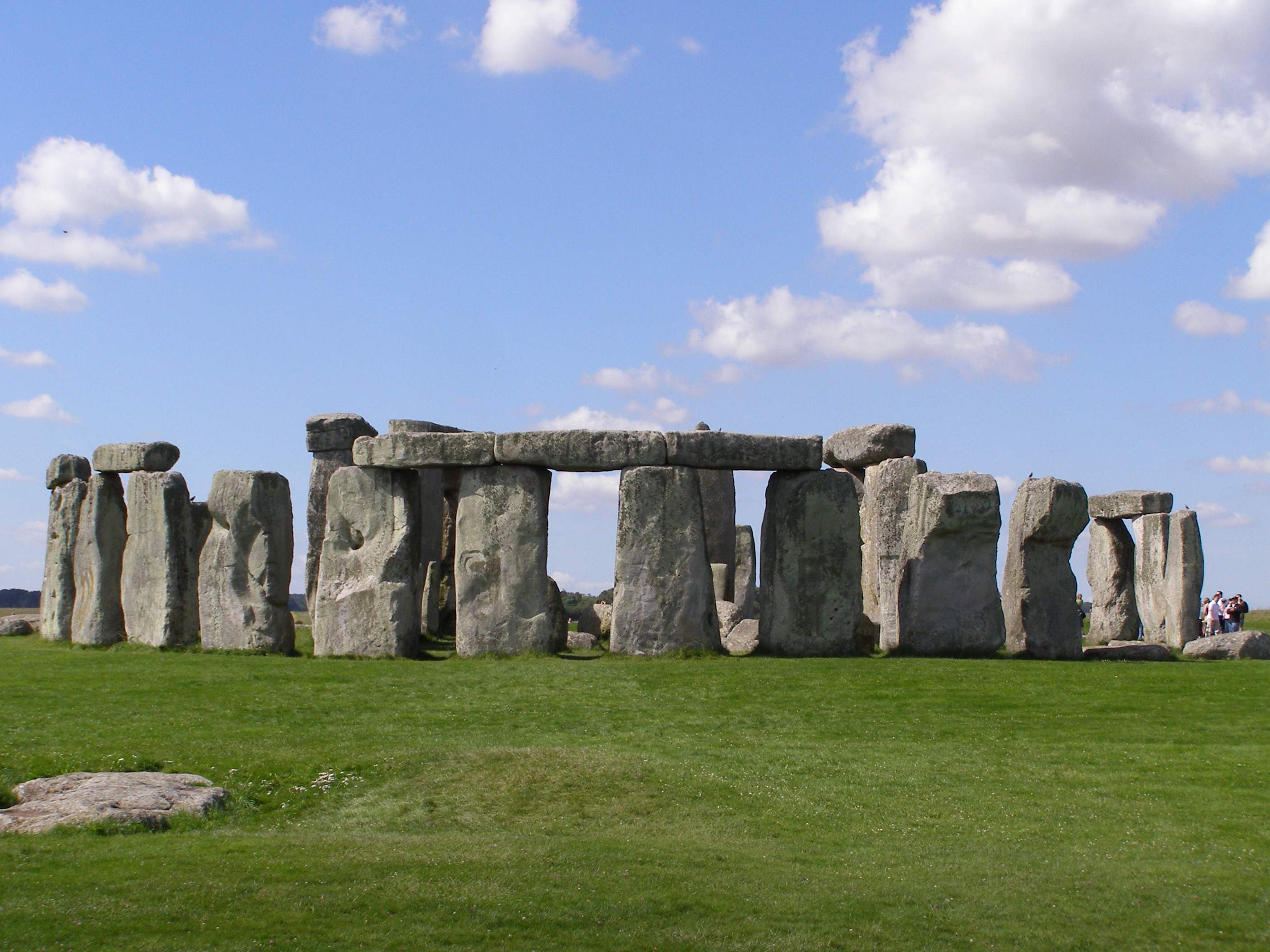
This is only the 2nd of MacGregor’s books, but we can already see an emphasis on history and scholarship. It’s clear his interest in Indiana Jones is more on the academic, rather than action, side. When MacGregor watches Indiana Jones, he’s swept up in the way history echoes into the present than in the way Indiana Jones survives escalating action sequences by his wits, or in the implausible traps and perils, or the intact ruins, etc. Though this book has plenty of suspense and conflict, it doesn’t offer much by way of action. There’s a sequence where Indy and some allies are captured and locked in an abandoned castle, then have to find their way through secret passages while their captors search for them. There are a few brief fights or foot chases. And it all culminates in a dramatic scene at Stonehenge. But much like Peril at Delphi, this is a more sedate adventure than we’re accustomed to seeing from Indiana Jones.
As far as characterization and dialogue, MacGregor does seem to have a solid grasp of the character. Indy is complex and flawed, sometimes grumpy but good at heart. He says things that feel “in character.” And the dialogue, even in the highly-academic parts, doesn’t feel too stilted.
Canon or Not?
There’s a solid throughline from Delphi to this book, and though you don’t have to have read book 1, it does lend some context that would otherwise be missing. And since we’re exploring Indy’s early years when he was first getting into the more dangerous side of “pulp archeology,” this seems like a nice 2nd outing. I’ll go ahead and consider it canon.
Skip It or Read It?
If you read the first one and are on board with this alternative (and, in my opinion, more plausible) origin story for Indiana Jones, I’d say go ahead and read it. If you’re aching for some action, follow it up with a Clive Cussler novel.

Indiana Jones and the Peril at Delphi

For the first part of this series, I figured I’d start with the first book, 1991’s Indiana Jones and the Peril at Delphi. I originally bought this book back in the early 90s, but at that time I was probably about 20 or 21, and I only got about two chapters in.
What stopped me? Well, to be blunt, I went in expecting a standard Indiana Jones adventure. I wanted trapped temples, evil Nazis, epic stunts, dangerous animals — the lot. But that’s not what this book delivers.
Peril at Delphi opens on Indiana Jones as a young man. He’s still in college, all those temples and Nazis and adventures still way in his future. Instead, he’s pulling campus pranks and spending his nights at a jazz club with a good friend, Jack Shannon. Indy is majoring in Linguistics, under pressure by his domineering and highly-traditional father (played so well by Sean Connery in Indiana Jones and the Last Crusade).
We then move forward to graduate school, where one of his teachers, Dorian Belacamus, asks him to accompany her for some field work in her native Greece. A recent earthquake has damaged the site of the Oracle at Delphi, and she needs an assistant to help her inspect the site. There, they discover a strange carved stone (the “Omphalos,” or Navel of the World). Things seem fine at first, but soon Indy is caught up in a plot to overthrow the Greek government and discovers that Belacamus believes herself the reincarnation of the Oracle itself.

I didn’t have any issues with the setup. In fact, I relish the idea of a series that shows Indiana Jones in his first adventures, dipping his toes into the world of “pulp archaeology” (a glorified version of treasure hunting that bears no similarity to real-world archaeology, which is slow and meticulous, cataloging and mapping everything, where Indy’s methodology is to smash his way through to the high-price relic inside). But I want a little more high-action out of an Indiana Jones story than this book delivered. There were a few fistfights, there was a scene where he dangled over a deep pit in an compromised position, and there was a car chase, but I’d have liked to have seen more intensity.
That lack of intensity seems to be MacGregor’s style, as I’ll see in the next books in the series.
Canon or Not?
So this is a tough one. As I’ll no doubt mention again, I have a hard time accepting the version of Indiana Jones’ early years that was given to us in the Young Indiana Jones Chronicles and in the opening sequence of Indiana Jones and the Last Crusade. In the TV series, he’s first a little kid traveling with his father around the world and meeting famous people as he learns important life lessons, and then later he impetuously joins the Belgian army at 17 so he can fight in WWI. In Last Crusade, he’s a Boy Scout who tries to stop some treasure thieves and ends up gaining all his notable characteristics in five minutes (which is just lazy writing, IMO). I have many problems with how he was depicted in these sources, but most of all, it just doesn’t feel like Indiana Jones. He’s a scholar and rogue, not a soldier. I fully believe he would have spent his teens and early 20s in academia, not in trench warfare.
Based on that, I’m much more willing to accept this book’s vision of Indy’s humble beginnings. I’ll count it as canon.
Skip It or Read It?
If you’re interested in exploring Indy’s (possible) other adventures but don’t want to waste your time with bad offerings, should you read this one? I’ll go ahead and say read it. You could do worse, for sure, and as plausible origin stories goes, it’s the best of the bunch.

Exploring the Indyverse

Those who know me know I’m a huge Indiana Jones fan. Ever since seeing Raiders of the Lost Ark on the big screen when I was 10 years old, it has remained my all-time favorite movie, never unseated despite serious contention from a host of other amazing movies. Indiana Jones embodies who I want to be in life: daring, clever, scholarly, resourceful, and bold — even if I don’t always live up to those ideals. And the Indiana Jones movies sparked a lifelong love for adventure, action, and fiction of that genre, where mysteries are ancient, peril is imminent, villains are villainous, ruins remain unexplored, and everything is bigger and more sensational than real life.
This love for Indiana Jones (and, by extension, pulp adventure in the vein of serials from the 1930s) was reignited after a somewhat more dormant period when, in 2017, I took my family to Disneyworld. I’d forgotten how much I loved Adventureland — the whole look, feel, and vibe of it, not to mention the Indiana Jones ride!
Following that trip, I decided to reconnect with my old hero by finally diving into the various stories about him that aren’t from the movies. The idea was first sparked by the backstory of the Disneyworld ride, which one gleans from information provided during the queue: Indiana Jones was heading up an archaeological dig in Southeast Asia, but has gone missing. Alas, by that point his fame has grown large enough that people flock from around the world to the site, and you — the riders — hop into a jeep and drive into the ruins to rescue him.
I know Indiana Jones appears in quite a number of other fictional media. There are comic books, television shows, novels, video games, even choose-your-own-adventure books. Since 2017, I’ve been slowly expanding my “Indyverse” collection, buying some of those items.
I’ll be reviewing them here, letting you know which ones are good and which ones are not so good, and deciding whether I’d consider them worthy additions to the canon.
If you have any suggestions, feel free to share them in the comments.
The Aysle Kickstarter for Torg Eternity is now live
The Torg Eternity universe continues to unfold. Our team just started the next wave for Aysle, the realm of high fantasy. I co-wrote the mega-adventure, “Revenge of the Carredon,” with Darrell Hayhurst. We’ve already passed $50k in just four hours!
The Savage Sign Issue 1 is now in print

The first issue of The Savage Sign, the amazing new periodical for Savage Worlds, is finally out in the wild and I received my copy. This magazine offers all kinds of content, from settings to adventures to threats you can use in your games, and features some amazing art and design work.
My content for this issue is the adventure “The Bride,” as well as much of the creature material for the “Virulent” setting.
We’re already starting up work on Issue 2, which will feature my setting Islands of Fire. Can’t wait!
Issue 1 of the Savage Sign is now available
Since December, I’ve been on the development team of an exciting new magazine for the Savage Worlds RPG called The Savage Sign, and I have to say, it looks absolutely amazing. This premier issue features four new settings, several standalone adventures, and tons of content. My contributions are the short Sword & Sorcery adventure “The Bride,” along with the write-ups for vampires and werewolves from the post-apocalyptic monster horror setting, Virulent.
We’re already working on the next issue, which we hope to put on Kickstarter soon. It will feature my mini-setting, Islands of Fire, a Polynesian-inspired fantasy setting many years in the making. Future issues will include other material from me.
Link below, if you’d like to check it out. If you’re a Savage Worlds fan, this is a great resource.
https://www.drivethrurpg.com/product/273119/The-Savage-Sign-01

Savage Cast Interview
My interview with the folks over at The Savage Cast went up a few days ago. In it, they ask me about my history with RPGs, what got me into Savage Worlds, what work I’m doing right now, and any upcoming work. My part is the first 30 minutes or so of this podcast. Have a listen!
The Savage Sign
Back in December, I joined on as a writer/developer at the Savage Sign, a new content magazine for the Savage Worlds roleplaying game. They’re currently in the last few days of the Kickstarter for issue 1. I’ve contributed a standalone adventure for it, as well as some creatures for a mini-setting included in this debut issue.
Take a look at the Kickstarter for more information:
They liked my pitch for Islands of Fire, so you can expect to finally see my mini-setting finally coming to life in the next few months.
I’ll also be writing a mini-setting for them called The Orb, which is a futuristic setting in which the heroes are contestants in a Hunger-Games-style battle royale competition that changes weekly. Watch for more information on that setting.
Lastly, I was interviewed today for the Savage Cast, a podcast that explores all things Savage Worlds, hosted by Christopher Landauer, the creator of the Buccaneers: Through Hell and High Water setting for Savage Worlds. One of my first publications since the early days of Savage Insider was with Buccaneers, an adventure called “Bloody Bones” in which the heroes end up unwitting pawns in a struggle between two cursed pirates. It was great fun talking RPGs and getting to share my ideas about Savage Worlds, the Savage Sign, as well as pitch some of my work. Thanks to the Savage Cast fellas!
Fires of Ra Preview #1
This week, Ulisses Spiele is previewing Fires of Ra, the epic adventure I co-authored for the Torg Eternity roleplaying game. This preview is the beginning of Act 3 (out of 7), where the heroes must journey to a cursed ruin deep in the Congo to retrieve a powerful artifact.
Torg Eternity – Fires of Ra Preview #1
Live Kickstarter Chat
Now that the Kickstarter campaign for the Nile Empire (the RPG setting I helped write) is underway – and going gangbusters I might add – the team and I are planning to do a 1-hour live Q&A session tomorrow, December 6 at 5pm Pacific. I’m not sure what I’ll talk about yet, but most likely I’ll share my background with this game, how I drafted the adventure, and what movies/games/books I pulled on for inspiration. I’m not very comfortable with public speaking so I’m definitely nervous, but also excited. I just spent half an hour fiddling with the background so it looks professional. I chose my reference library; shelves full of RPG manuals and gamebooks would have been better, but what can you do.
Anyway, here’s the link if you’d like to tune in!

Perfectionism
I spent three hours last night reading through the current draft of The Fires of Ra, which is heading off to the editor on Monday. Other than a few small issues, it’s mostly ready. However, I’m not ready. Reading through it I can see several things I’d have done differently if I wrote them today – and I only penned them within the last year!
The Greek philosopher Heraclitus supposedly said “No man can step in the same river twice, for it’s not the same river and he’s not the same man.” That saying is very true for the relationship between an author and his or her written works – we always see things we’d like to change, because our perception has changed, perhaps even just a little, since we last wrote it. The more time goes by, the greater that change in perception.
But there’s another saying that applies, this one by Leonardo DaVinci: “A work of art is never finished, only abandoned.” At some point, every writer must simply declare his written work finished and push it out of the nest. There will always be small things (or large things) that could be revised, reworked, replaced – but unless one stops that urge, the work will always languish in an unfinished state.
From here out, any changes will have to exist in my head. I’m proud of what we (Darrell and I) have created and I’m sure people will enjoy it. And that’s all I can really ask for.
The Fires Of Ra!

Now that it is getting closer to the Kickstarter, I can start talking about the most amazing project of my RPG writing career so far. Back in 2016, I was contacted by the team at Ulisses Spiele, specifically Deanna Gilbert, to see if I would be interested in contributing a chapter or two to an upcoming adventure tied to their release of the Nile Empire sourcebook for the Torg Eternity line.
I’ve been a fan of Torg since it came out in 1990. What I loved so much about it as a tabletop RPG was the way it brought multiple genres into play all at the same time, and in a way that made both system-sense and setting-sense. In other words, it worked on both a game level and a game fiction level. Rather than being limited to, say, fantasy tropes alone (as you are when you play something like Dungeons & Dragons), you can create characters from many different genres and have them work together as a team and have them balanced in power against one another. Even if you wanted to play a spear-wielding shaman traveling with a fantasy wizard, a cyborg, and a werewolf, nobody would be outclassed by the others, due to the way Torg balances the game.
Of all the “realities” (Torg’s term for the different worlds invading our Earth and carving out areas where the world works as it does on their homeworld), my favorite was always the Nile Empire. This was a gonzo world of 1930s pulp action serials – gangsters, masked crusaders, tomb-robbing archaeologists, rocket rangers, weird scientists – set in a version of Egypt ruled by the fascistic and clinically insane Pharaoh Mobius, also that world’s most accomplished supervillain. It’s really as amazing as it sounds. Nowhere else in the Torg universe could you have such amped-up adventure: Trap-filled tombs, fistfights atop burning locomotives, strange gadget belts that let you fly, ancient curses that bring mummies to life… It was basically a supermix of Raiders of the Lost Ark, The Mummy, The Rocketeer, Dick Tracy, and The Shadow, with a healthy dose of Stargate tossed in there for Egyptian spice.
So when Deanna contacted me and asked if I would be interested, I didn’t even have to think about it. YES!
We scrapped an earlier draft, ending up with something even stronger. Then, as the project changed, my share of the writing grew from a couple of chapters (we call them “acts”) to four, not to mention the introductory material at the front and a supplement detailing a lesser-known location in the Nile Empire. In the end we settled on a title: Fires of Ra. Perfect, considering the dramatic battle at the climax of this adventure.
This project was my passion, and I’m incredibly proud in how it turned out. On November 20th, the Kickstarter will begin. After it ends the first digital copies of all the content will go out to backers, including this adventure.And next year the adventure should be available in gaming stores! I’ll be able to offer more details as we inch closer to that time.
Some Big News
I have two pieces of big news. First, I’m now being represented by Beth Marshea of Ladderbird Literary Agency! She will be looking for a home for my new novel, Sun Dogs, as well as handling my screenplays (I have one for my self-published novel, A Chant of Love and Lamentation, as well as The White Witch of Rose Hall, set in plantation-era Jamaica).
Second, I’m now the Fiction Editor for the literary journal Sand Hill Review. This was the journal who took my first published story (“Wild Horses”) and who nominated that same work for a Pushcart. SHR has been very good to me, and I’m happy to give back as they make some new exciting changes to their format.
Fellow writers, we are open to submissions! We have a submission fee, but (for now) as we begin the process of soliciting submissions, the competition is minimal. We’d love to see your work.
Honolulu Cracks Down on Homelessness
I touched on the issue of homelessness in A Chant of Love and Lamentation, as it has long been problematic in Hawai’i. The source of the problem runs deep into mental health, drugs, and the high cost of living, but homeless from other parts of the nation are often given a one-way ticket to Hawai’i. Sending them to the islands is often seen as a great solution because they end up in a place where they never have to worry about freezing temperatures, and those who send them probably think they are doing something good, but the fact that they can’t come back is obviously a major part of it. Hawai’i has lost most of its agricultural land to development, making it an import economy which is particularly dependent upon others, plus the notoriously high cost of living makes it very hard for someone without the right combination of education, startup funds, support networks, and job prospects to better their situation.
In Chant, the homelessness situation becomes rapidly worse following a one-two punch of economic and social disorder, and tosses fuel to the smoldering fire of unrest. This situation will only get worse before it can get better.
Behind the Spark: “You Can’t Do That in Short Fiction!”
Behind the Spark: “You Can’t Do That in Short Fiction!”
Brian Lewis, editor of Spark: A Creative Anthology, started a new series discussing his reasons for selecting certain stories for inclusion in his literary journal, and chose to feature “Her Fruitful Shore” for the first entry! He starts with an examination of my story’s approach and the “rules” it breaks. After that is my response, where I discuss the story’s origins, evolution, and inspiration. I’m pleased to have been chosen for this, and think this series can be insightful for other writers.
Protest and Demand Filed with the United Nations General Assembly
As a member of a Hawaiian Sovereignty listserve, I received this interesting email today. The process of pushing for an independent Hawai`i is a lot less intense, abrupt, and fraught with human misery than in my novel, for sure.
PRESS RELEASE
For Immediate Release – August 10, 2012
Contact: Dr. David Keanu Sai, Ph.D.
Telephone: (808) 383-6100
E-mail: interiorhk@hawaiiankingdom.orgHawaiian Kingdom Protest and Demand filed with United Nations General Assembly against the United States of America and one hundred seventy-two (172) member-States of the United Nations
NEW YORK, 11 August 2012 — On Friday afternoon, August 10, the Ambassador-at-large and Agent for the acting Government of the Hawaiian Kingdom, H.E. Dr. David Keanu Sai, Ph.D., filed with the President of the United Nations General Assembly at United Nations headquarters in New York a Protest and Demand against the United States of America concerning the prolonged occupation of the Hawaiian Islands since the Spanish American War of 1898, and 172 member-States of the United Nations. All the named States in the Protest have treaty relations with the Hawaiian Kingdom either as States or as successor States to their predecessor. There are forty-six (46) States and one hundred twenty-seven (127) successor States that have treaty relations with the Hawaiian Kingdom.
The Protest was received and acknowledged by Dr. Hanifa Mezoui, Ph.D., Special Coordinator, Third Committee and Civil Society, Office of the President of the Sixty-Sixth Session of the General Assembly. The Protest was also received and acknowledged by the Executive Secretary of the G-77 at the United Nations, and the Executive Secretary of the Council of Presidents, a think tank of former Presidents of the United Nations that advise the sitting President of the General Assembly. One hundred twenty (120) of the named States are members of the G-77.
The Protest and Demand was filed with the General Assembly in accordance with Article 35(2) of the United Nations Charter, which provides, “a State which is not a Member of the United Nations may bring to the attention of the Security Council or of the General Assembly any dispute to which it is a party if it accepts in advance, for the purpose of the dispute, the obligations of pacific settlement provided in the present Charter.” The Hawaiian Kingdom is a non-Member State of the United Nations.The Protest and Demand calls upon the United Nations General Assembly:
1. To ensure the United States of America comply with the 1893 Lili‘uokalani assignment & Agreement of restoration, 1899 Hague Convention, IV, the 1949 Geneva Convention, IV, and international law, as hereinafter described;
2. To ensure that the United States of America establishes a military government, to include tribunals, to administer and enforce the civil and penal laws of the Hawaiian Kingdom pursuant to the 1893 Lili‘uokalani assignment and Article 43 of the 1907 Hague Convention, IV, as hereinafter described;
3. To ensure that all member States of the United Nations shall not recognize as lawful the United States of America’s presence and authority within the territory, territorial seas, exclusive economic zone and airspace of the Hawaiian Kingdom, except for its temporary and limited authority vested under the 1893 Lili‘uokalani assignment and Article 43 of the 1907 Hague Convention, IV, as hereinafter described;
4. To ensure full reparation for the injury caused by the serious breach of obligations and internationally wrongful acts in the form of restitution, compensation and satisfaction, whether singly or in combination.
The Ambassador-at-large and Agent for the Protest, Dr. Sai, served as lead Agent for the acting Government of the Hawaiian Kingdom in arbitral proceedings before the Permanent Court of Arbitration, Larsen v. Hawaiian Kingdom, 119 International Law Reports 566 (2001).[1] The Arbitral Tribunal in the Larsen arbitration comprised of Professor James Crawford, SC, Presiding Arbitrator, who at the same time was a member of the United Nations International Law Commission and Special Rapporteur on State Responsibility (1997-2001); Professor Christopher Greenwood, QC, Associate Arbitrator, who now serves as a Judge on the International Court of Justice since February 6, 2009; and Gavan Griffith, QC, Associate Arbitrator, who served as former Solicitor General for Australia. The jurisdictional basis of the Permanent Court of Arbitration in Larsen v. Hawaiian Kingdom was a dispute between a State and a private person. Dr. Sai also served as Agent for the acting Government when a a Complaint was filed against the United States of America with the United Nations Security Council on July 5, 2001, under the Presidency of China.[2]
The Hawaiian Kingdom will withdraw States named in the Protest and Demand, with the exception of the United States of America, when these States shall declare, whether individually or collectively, that they will not recognize as lawful the United States of America’s presence and authority within the territory, territorial seas, exclusive economic zone and airspace of the Hawaiian Kingdom according to Article 41(2), Responsibility of States for International Wrongful Acts (2001), except for the United States’ temporary and limited authority vested by virtue of the 1893 Lili‘uokalani assignment, Article 43 of the 1907 Hague Convention, IV, and international law.
The Hawaiian Kingdom achieved the recognition of its independence as a sovereign State on November 28, 1843 by joint proclamation from Great Britain and France and by 1893, the Hawaiian Kingdom maintained over ninety (90) Legations and Consulates throughout the world. The Hawaiian Kingdom has been a Member State of the Universal Postal Union since January 1, 1882, which is currently an agency of the United Nations.This case arises out of the prolonged and illegal occupation of the entire territory of the Hawaiian Kingdom by the United States of America since the Spanish-American War on August 12, 1898, and the failure on the part of the United States of America to establish a direct system of administering the laws of the Hawaiian Kingdom. There are currently 119 United States military sites throughout the Hawaiian Islands encompassing 230,622 acres of land under the command and control of the United States Pacific Command whose headquarters is situated on the Island of O‘ahu. These military sites have been illegally established within the territory of the Hawaiian Kingdom and have consequently placed the Hawaiian State and its population in grave danger from military attack by foreign States, e.g. Japan’s military attack of United States military sites on the Island of O‘ahu on December 7, 1941, and the threat of missile attacks from China, the Democratic People’s Republic of Korea, and the Russian Federation.
The United States disguised its occupation of the Hawaiian Kingdom as if a treaty of cession annexed the Hawaiian Islands. There is no treaty. For the past 114 years, the United States of America has committed a serious international wrongful act and deliberately misled the international community that the Hawaiian Islands had been incorporated into the territory of the United States. It has unlawfully imposed its internal laws, by Congressional legislation, over Hawaiian territory, which includes its territorial seas, its exclusive economic zone, and its airspace, in violation of its treaties with the Hawaiian Kingdom, the 1907 Hague Convention, IV, the 1949 Geneva Convention, IV, and international law.
The Protest and Demand and Annexes will soon be available on online at:
[1] Bederman & Hilbert, “Arbitration—UNCITRAL Rules—justiciability and indispensable third parties—legal status of Hawai‘i,” 95 American Journal of International Law 927-933 (2001).
[2] Patrick Dumberry, “The Hawaiian Kingdom Arbitration Case and the Unsettled Question of the Hawaiian Kingdom’s Claim to Continue as an Independent State under International Law,” 2(1) Chinese Journal of International Law 655-684 (2002); and David Keanu Sai, “A Slippery Path towards Hawaiian Indigeneity: An Analysis and Comparison between Hawaiian State Sovereignty and Hawaiian Indigeneity and its Use and Practice in Hawai’i today,” 10 Journal of Law and Social Challenges 68-133 (Fall 2008).
ABNA Recap
Folks have been asking what happened at the Amazon Breakthrough Novel Award, which I attended in Seattle a couple of weeks ago. Here’s a synopsis of the trip.
In the days leading up to the trip I was growing increasingly anxious, for two reasons. First, I knew I had to speak for several minutes about the inspiration for A Chant of Love and Lamentation, and then read a portion of it. I’m no public speaker, and often find my voice clenching up in nervousness when trying to explain something friends. Second, so much was hanging on an unknown that I was growing anxious about that alone. A few days before departure, I finally pinned down the selection I was going to read at the ceremony — the end of Charlie’s section in Part One, the scene where he has killed the boar and is running with a torch through the night jungle. I chose it because I liked the evocative imagery (reminiscent of Lord of the Flies), and because it is a good moment in the book. I also wrote out a bunch of notes from which to deliver my speech. This was necessary because I didn’t want to be flailing around up there, searching for words. Under pressure, my mind has a tendency to shut down.
Rae and I have a toddler, so we needed someone to look after her. Thankfully, Rae’s mom Jeannie volunteered to stay at our house for a couple of days and do the honors. There were a couple of other complications: We were to leave mid-afternoon on what is literally the last day of school at Rae’s job, and upon returning on Sunday I had to spend hours reading and submitting grades for my college composition course.
We flew to Seattle, a short trip on a tiny plane. When we landed, we were met at the baggage carousel by a chauffeur with my name on a sign. This was a real first for me, one of many. He drove us to the downtown Seattle Hyatt in a Lincoln towncar. As Rae and I checked in (the nicest hotel I’ve ever stayed in, by the way — what a lobby!), the counter rep said I had a couple of packages. The first package was a long white box courtesy of my mother, stepfather, and grandmother. In it were two lei, one for Rae and one for me. I wore the long lei with the maile vines and purple flowers after the ceremony, and Rae wore the white rose lei.
The other package was a “swag bag” from Amazon/Penguin, containing several trade paperbacks from various authors. Notable among them was the Young Adult winner from last year’s ABNA contest (“Spookygirl”) and a hardback version of Kerouack’s On the Road. But to my shock, the bag also contained a Kindle Touch! Both Rae and I have wanted one for a while. Up to now, I’ve been reading my downloaded Kindle books through my iPod, so this was pretty sweet.
Our room was gorgeous. There was a large King-sized bed, a wonderful view, and a marble bathroom with a huge tub and glass shower. In fact, the bathroom alone was worth half the room’s price, I’m sure. I didn’t want to leave on Sunday!
Another entrant in the General Fiction category, Alan Averill, had kindly set up an informal dinner + drinks for everyone at a restaurant near Pike Place Market, a short walk away. This is where we first met everyone. Rae and I sat at one end of a long table where we got to chat with Charles Kelly (my other General FIction “competitor”), Rebecca Phillips (Young Adult entry: Out of Nowhere), and her husband Jason. Great conversation over a delicious meal is one of life’s pleasures.
We retired to our hotel room and got some sleep. In the morning, our host from Amazon, Thom Kephart, brought us all to breakfast at a posh restaurant. How posh? Posh enough to serve octopus for breakfast. Also on the menu: gravlax, a source of much puzzlement for all of us. At breakfast we got to meet folks from Penguin publishing — at our end of the table was Kent, a great guy who is Penguin’s go-between with Amazon.
Following breakfast, we all had several hours to kill in Seattle. I used to live there, and Rae has been several times, so we didn’t feel the need to fill the hours with touristy things. Instead, we walked around Pike Place Market looking for a gift for Jeannie and to enjoy the morning. We did a little more shopping, then retreated to the hotel room to get some rest. By this point our nerves were jangling and we could hardly do anything else. I practiced and polished my speech and tried my best to keep my mind off it all.

Then we all met in the lobby once more, filed into a white van, and drove to the Olympic Park’s PACCAR Pavilion for the ceremony. By this point all of us were beside ourselves with anxiety, excitement, and wonder at the strangeness of the experience. Inside the large, glass-walled room there was a podium, wine bar, and three food stations, plus a dozen large round tables. Already there were people waiting for the event to start, and even more arrived as we stood around, too nervous to know what to do with ourselves. We met quite a few industry people, from both Amazon and Penguin, as well as the winner from a couple of years ago who had come to speak at the ceremony.
We tried our best to eat, and somehow I managed to get through a plate of food. Then the speeches began, first from distinguished guests, and then from us contestants. They went through Young Adult first. It began with Cassandra, who was both fortunate and unfortunate to be selected first. Then Rebecca spoke and read, and finally Young Adult ended with Regina. I think everyone enjoyed her speech, which compared the way children continually try to get their parents to “look” with the same impulse in writers. She should write that up as an essay, actually.
General Fiction got underway, starting with Alan. By this point I was having a hard time focusing on the actual content of the speech, so I remember very little about what Alan said. Charles came next, and what stood out to me was how confident he appeared, but more than that, how he seemed to have his entire passage memorized, because he almost never looked down at the paper while reading!
At last it was my turn. Mine was the closing presentation. I admit I had tunnel vision as I went up to the podium and began to talk, and I thought my nervousness was apparent, but Rae says I looked very sure of myself while speaking and reading, and this was supported by video of my speech. I attribute it to preparation, as well as over ten years of classroom teaching experience, which went a long way to lessening my terror of public speaking.

Once I sat down, Thom Kephart took the podium again to announce the winners. Regina won for Young Adult, then went up for a thank-you speech. Then they announced the General Fiction winner: Alan Averill, for The Beautiful Land. I felt a moment of disappointment, but this was assuaged by the fact that Alan is a great guy who also deserved to win. In fact, as Rae and I discussed in the days leading up to the event, it’s a shame there couldn’t be three winners, and losing to either Alan or Charles wouldn’t be a terrible thing.
The ceremony over, we all rode back in the van to the hotel. I would have liked to go out some more, but I think all of us were wrung out by that point. It was the last we saw of each other in person (though we are now all friends and remain in contact). Rae and I ventured out that night for some late-night pizza, then slept like babies in the huge bed, relieved that it was all over, one way or another.
The next day we were driven in a towncar back to the airport and flew the short trip home. As I mentioned, I had to immediately retreat to my office upstairs and start grading, which wasn’t done until midnight. Not my preferred way to end such a trip, but at least most of the grading had been done long before.
As a coda to the trip, Alan and his wife came to Portland the next day, a trip they had planned long before he even knew he was a Finalist. I got to spend a couple of hours chatting with them and having drinks and just generally getting to know Alan as something other than an opponent. He’s a great guy and we share a lot in common, as it turns out.
So: No, I didn’t win. But making it to Finalist was, in itself, like winning. I’m now seeking representation from agents and starting to think about my next novel.

I encourage anyone thinking about entering the Amazon Breakthrough Novel Award to give it a shot. For one, it’s free — already putting it apart from other contests out there. It also has a great support network in the discussion boards, and it draws big names in the publishing field. Even if one doesn’t win, contestants who make it into the second and third rounds receive feedback and a review which can be used to help direct their editing efforts.
What an adventure! Making it to Finalist was surely one of the biggest events of my writing career.
Also, there was this awesome crystal award…
Anticip ation
In less than 24 hours the winners of the Amazon Breakthrough Novel Award will be announced. I’m writing this in the king sized bed in our swank Hyatt room in downtown Seattle, where Amazon has put us up for the event, and I can’t stop thinking about how all the waiting and anticipation over the last four weeks is about to come to an end.
It’s a bit like that classic Schrödinger’s Cat experiment, where an unknown outcome is not determined until observed. In that experiment, a live cat is placed in a box with a device that will release deadly cyanide gas into the air if a certain radioactive particle decays within a certain period of time. According to the theory of quantum physics, the cat is neither dead nor alive — thus the outcome not determined — until the experimenter opens the box and observes the state of the cat.
Like that poor kitty, for the past two weeks I’ve been in an uncertain state. When the voting period for ABNA ended, the radioactive particle either decayed or didn’t, and I’ve either won or lost already. In fact, for the last two weeks I’ve already either won the contest or lost it, and now I’m just waiting to open the box and find out which it is.
Despite all the nail-biting anticipation and yearning to know the outcome, at the same time these last few weeks since being told I am a Finalist have been dreamy and full of hope, and for that I am going to miss them.
Tonight all six winners, along with their guests (my wife, Rae, in my case) went out to a place by the iconic Pike Place Market to have dinner and drinks and finally meet each other. They are wonderful people and I wish we could all win. It’s been an honor being able to make it so far in this competition. The next time I update this blog will most certainly be after the winner is announced at the end of the 3-hour awards ceremony tomorrow night. Wish me luck.
“Chant” is mentioned in the Honolulu Star-Advertiser
Last week I was interviewed by Steven Mark of the Honolulu Star-Advertiser, who wanted to do a story on A Chant of Love and Lamentation reaching the Finals in the ABNA contest. This morning I received a Google Alert telling me about 1 new result for “a chant of love and lamentation.” The article is up in the Sunday paper today. Here’s the link. You might need a subscription to view the whole article. I’ll see if I can post it after some time has passed.
I was interviewed by Steven Mark two times, both for about half an hour, and he asked very probing and insightful questions. The article discussed the competition, then provided a little background on my history with Hawai`i and my thoughts on the sovereignty movement. He had also asked about the process of writing the book, how it had changed, and where some of my ideas came from, and a few of my answers were included in his article. For example, when he asked why I had chosen to focus on so much conflict, I told him that I don’t think one could see change happen quickly without some extreme deprivation, and conflict is interesting and makes for a better read than slow political progress.
Steven Mark also mentioned my time as a cab driver and other local experiences that helped me flesh out characters. He ended by pointing out that I’m aware of the delicate nature of the topic, but that I wanted to tell the story.
It was exciting to see a mention in the paper! To this day I don’t know how “locals,” those of Hawaiian descent, sovereigntists, or any combination of the above will receive this novel. I have a fervent hope that they will see that violence is not glorified in “Chant” — in fact, the way real freedom is won is through the political process by smart and driven characters, and those who commit violent acts are shown as remorseful, cowardly, or damaged. I’m a firm believer in self-determination for kanaka maoli, and hope this novel resonates with readers.